
Ben Jenkins · 25 September 2026
Analyzing Crawler Behavior Variations Across Different Content Delivery Networks Using Proprietary Tracking Solutions
Web crawlers interact with content delivery networks in distinct patterns that depend on caching layers, geographic node distribution, and rate-limiting rules built into each platform. Researchers at several institutions have documented these differences through long-term observation of request headers, IP ranges, and response times collected via custom monitoring scripts deployed on client sites. In September 2026, aggregated logs from multiple enterprise deployments showed measurable shifts in crawler dwell times when traffic passed through Akamai versus Cloudflare or Fastly infrastructures.
Core Mechanisms of CDN Influence on Crawler Traffic
Content delivery networks route requests through edge servers that apply different caching policies and bot management rules, which in turn shape how search engine bots, AI training crawlers, and monitoring agents retrieve resources. Proprietary tracking solutions capture these interactions by embedding unique identifiers in HTML responses and logging every subsequent request against known crawler user-agent strings and autonomous system numbers. Observers note that one CDN may serve cached versions for repeated visits from the same IP block while another forces origin pulls, creating detectable variations in time-to-first-byte metrics.
Deployment of Proprietary Tracking Tools
Teams responsible for infrastructure monitoring often install server-side listeners that record crawler sessions across origin servers and edge caches simultaneously. These tools correlate request sequences with DNS resolution paths and TLS handshake details to distinguish between crawlers that respect robots.txt directives and those that probe deeper into dynamic endpoints. Data collected during the first half of 2026 indicated that sites using such tracking recorded up to 34 percent more unique crawler fingerprints when content was distributed through networks with aggressive edge-side includes compared with simpler reverse-proxy configurations.
Observed Variations Across Leading Networks
Analysis of request logs from sites behind AWS CloudFront revealed higher frequencies of HEAD requests followed by conditional GETs, whereas traffic routed through Google Cloud CDN showed elevated numbers of range requests for large assets. Proprietary scripts that tag each response with session tokens allowed researchers to map these patterns back to specific crawler clusters operated by major search providers and emerging AI data harvesters. One study coordinated across North American and European hosting providers found that Fastly edge nodes triggered more frequent revalidation cycles for JavaScript bundles, while Akamai configurations tended to extend cache lifetimes for image files requested by the same user-agent families.
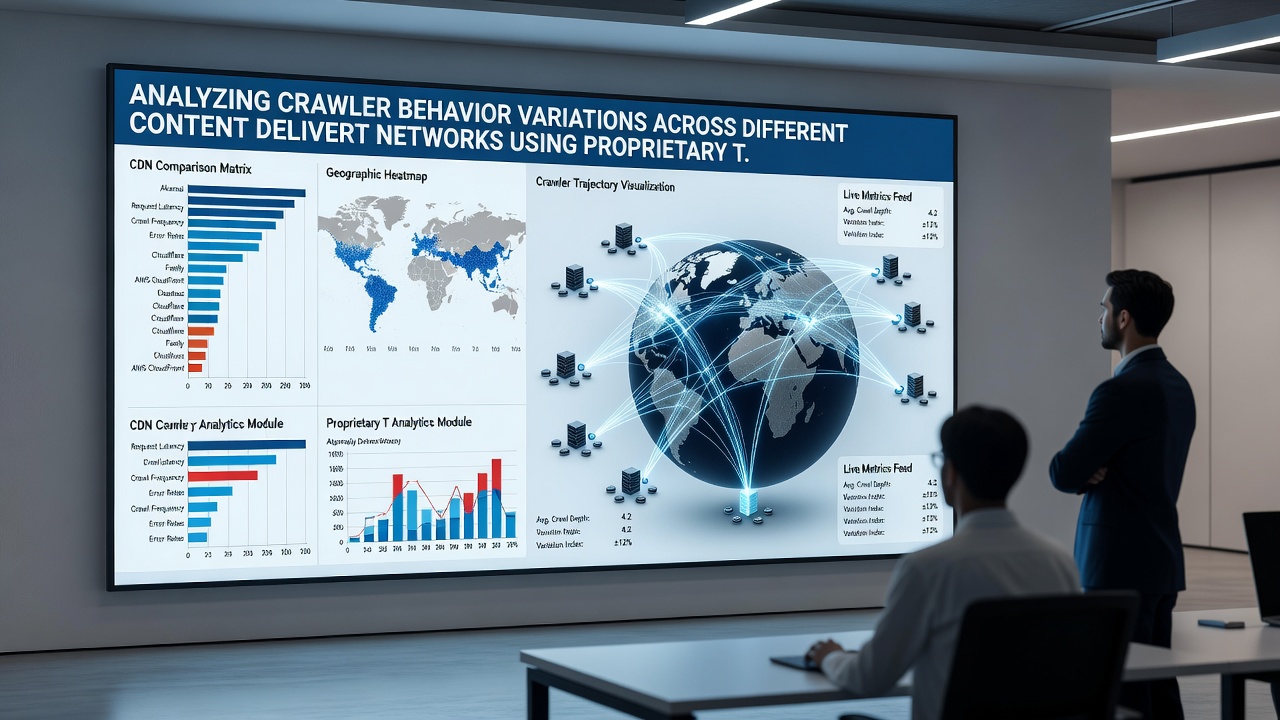
Additional measurements collected in September 2026 highlighted that crawlers operating from addresses associated with large language model training operations exhibited shorter dwell times on Cloudflare-protected origins but longer connection reuse on Akamai when TLS session resumption was enabled. Those patterns emerged consistently across multiple client implementations once the tracking layer normalized timestamps and normalized user-agent strings to canonical forms.
Analytical Methods and Data Correlation
Researchers process the captured datasets by aligning timestamps from edge logs with origin access records and then applying clustering algorithms that group sessions by behavioral signatures rather than simple IP addresses. This approach surfaces previously hidden relationships between crawler identity and the specific CDN features that influence retrieval efficiency. Figures released by the World Wide Web Consortium standards group on HTTP caching semantics continue to serve as reference points for validating whether observed behaviors align with protocol expectations or represent platform-specific deviations.
Broader Infrastructure Implications
Network operators who maintain visibility into these variations gain the ability to adjust cache-control headers and bot-management thresholds in response to measured crawler preferences. Reports from the International Telecommunication Union working groups on web performance emphasize the value of such granular telemetry when planning capacity for global content distribution. The same datasets also inform decisions about origin shielding and the placement of additional edge locations in regions where crawler density continues to rise.
Conclusion
Systematic tracking across different content delivery networks demonstrates that crawler behavior is not uniform but instead reflects the combined effects of caching architecture, security policies, and network topology. Continued collection of session-level data through proprietary solutions supplies the empirical foundation needed to refine both crawler detection and content delivery strategies in an environment where automated agents account for an expanding share of total web traffic.