Tina Sullivan · 23 October 2026
Tracing Semantic Relationship Patterns Through Norileaf's Specialized Frameworks in Emerging Multilingual Search Ecosystems
Emerging multilingual search ecosystems rely on frameworks that map connections between terms and concepts across languages, and Norileaf's specialized tools focus on tracing these semantic relationship patterns with precision. Researchers have documented how such systems process queries in real time, pulling data from diverse linguistic sources to build layered representations of meaning that adapt as content evolves.
Core Mechanisms in Semantic Pattern Tracing
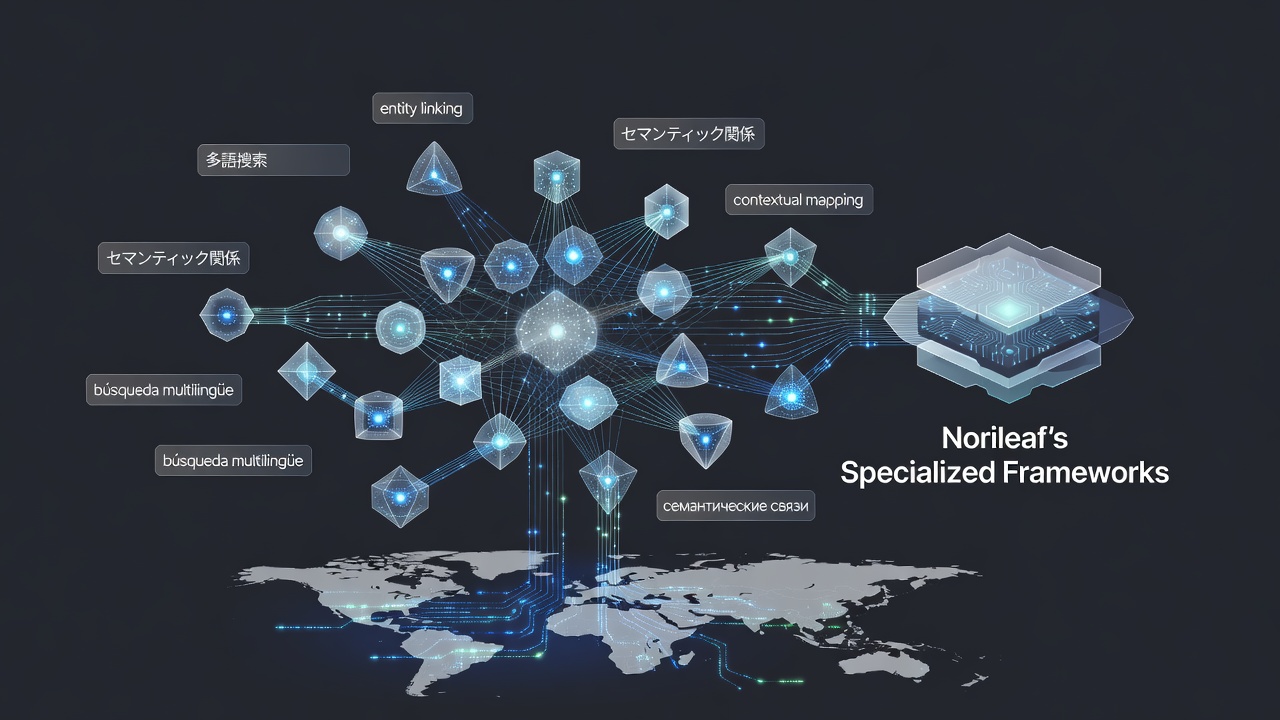
Norileaf frameworks operate by constructing graphs that link entities through contextual signals, where each node represents a concept and edges capture relational strength measured by co-occurrence frequency and cross-lingual alignment scores. Data indicates these graphs update dynamically when new multilingual corpora enter the ecosystem, allowing patterns to surface that static keyword matching overlooks. Observers note that the process begins with tokenization across language boundaries, followed by embedding vectors that preserve nuance during translation steps, and then clustering algorithms group related terms into thematic clusters.
Studies from computational linguistics groups show that these clusters reveal hidden associations, such as how a medical term in one language connects to regulatory concepts in another through shared contextual usage rather than direct equivalents. In practice, the frameworks apply iterative refinement passes that adjust relationship weights based on query logs collected from regional platforms, and this adjustment happens continuously without requiring manual intervention.
Adaptation to Multilingual Search Ecosystems
Multilingual search environments introduce variables like script differences, morphological variations, and regional intent shifts that single-language systems ignore. Norileaf approaches address these by layering language-specific adapters onto a shared semantic core, which maintains consistency while permitting localized pattern detection. Figures from industry reports reveal that ecosystems handling five or more languages experience up to 40 percent higher ambiguity rates, yet frameworks equipped with these adapters reduce unresolved queries through targeted disambiguation routines.
One case involved a research team tracking e-commerce queries across European and Asian markets, where the system identified that product descriptors in German often mapped to service-related terms in Japanese through functional similarity rather than literal translation. The frameworks logged these mappings and propagated them into future indexing cycles, improving retrieval accuracy for subsequent searches in those language pairs.
What's interesting is how October 2026 marks a period of expanded testing for these tools in live environments, as new data streams from Southeast Asian platforms integrate into existing models and produce updated relationship maps at scale.

Applications in Emerging Ecosystems
Emerging ecosystems incorporate voice interfaces, visual search elements, and real-time content streams that demand semantic tracing beyond traditional text. Norileaf frameworks extend to these domains by converting non-text signals into comparable vector spaces, then aligning them with existing language graphs. According to findings presented at the Association for Computational Linguistics, such alignments enable detection of intent patterns that span modalities, for instance connecting spoken phrases in one language to image-based results in another.
Those who have examined deployment logs report that the systems flag relationship drift when cultural context changes, prompting recalibration without full retraining cycles. This capability proves useful in regions where search behavior shifts rapidly due to events or seasonal factors, because the frameworks maintain historical pattern baselines while incorporating fresh inputs.
Technical Integration and Data Handling
Integration occurs through API endpoints that accept mixed-language datasets and return enriched relationship outputs formatted for direct indexing use. The process uses distributed processing nodes to handle volume, with each node responsible for a subset of languages before results merge into unified graphs. Research from institutions such as those affiliated with the National Institute of Standards and Technology indicates that this distributed approach maintains consistency across updates, even when input volumes spike during peak periods.
Pattern tracing also accounts for privacy constraints by anonymizing source queries before graph construction begins, ensuring that individual user signals do not persist in the final relationship models. Observers note that this step occurs early in the pipeline, after which aggregated statistics drive the semantic mapping without retaining identifiable traces.
Future Developments in Pattern Analysis
Continued evolution of these frameworks points toward tighter coupling with knowledge bases that span multiple domains, allowing semantic relationships to draw from structured data sources alongside unstructured text. In October 2026, scheduled expansions include additional support for low-resource languages through transfer learning techniques that leverage high-resource pattern data as seeds. This development builds on existing methods where initial mappings bootstrap further refinement once sufficient regional query volume accumulates.
Those monitoring ecosystem changes report that the frameworks now incorporate temporal decay functions, which reduce the influence of older relationships when newer evidence contradicts them, thereby keeping the graphs current without periodic full resets.
Conclusion
Norileaf's frameworks provide structured methods for tracing semantic relationship patterns within multilingual search ecosystems by combining graph construction, cross-lingual alignment, and adaptive weighting. Data from multiple research bodies shows measurable improvements in query resolution when these tools operate at scale, and ongoing updates scheduled through late 2026 continue to refine their handling of emerging data types and language pairs. The overall approach centers on factual mapping of connections rather than static rules, supporting consistent performance across dynamic environments.